Fill Dirt Calculator
Calculate fill dirt for grading and backfill. Choose your shape below.
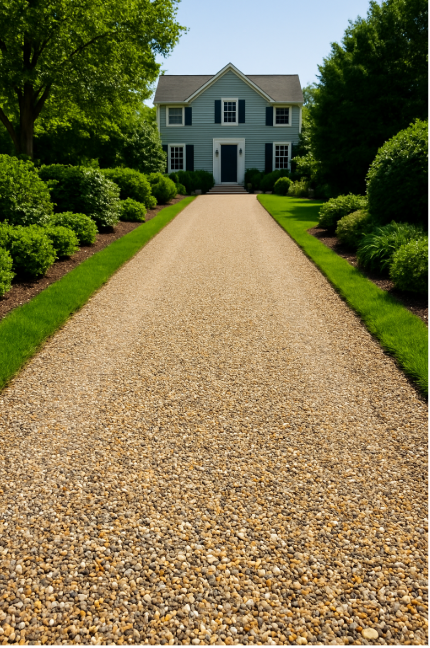
Fill Dirt – Straight Area
Width
Calculation is based on average density of 1400 kg/m³.
Calculation Results
Gravel Volume
0.00 m³
Gravel Weight
0.00 t
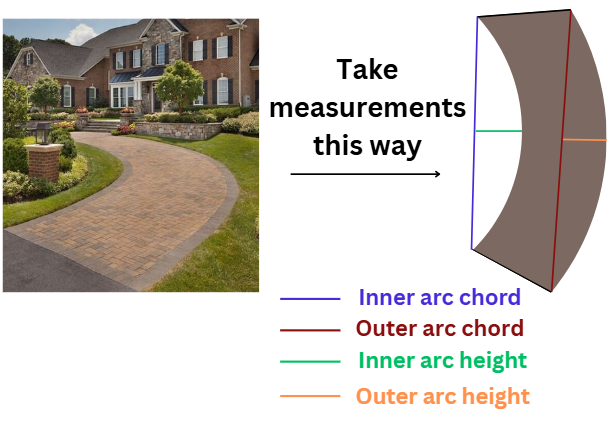
Fill Dirt – Curved Area
Calculation is based on average density of 1400 kg/m³.
Calculation Results
Gravel Volume
0.00 m³
Gravel Weight
0.00 t
Fill Dirt – Circular Area
Calculation is based on average density of 1400 kg/m³.
Calculation Results
Gravel Volume
0.00 m³
Gravel Weight
0.00 t

Rectangular Fill Dirt Calculator
Calculation is based on average density of 1400 kg/m³.
Calculation Results
Gravel Volume
0.00 m³
Gravel Weight
0.00 t
What Is Fill Dirt?
Fill dirt is soil used to raise ground levels, fill low areas, and provide a stable base for construction and landscaping. Unlike topsoil, fill dirt contains little organic matter, making it more stable and less prone to settling over time.
It is commonly used in grading, site preparation, foundation backfill, and leveling uneven ground before installing driveways, slabs, or landscaping features.
Fill Dirt vs Topsoil vs Backfill
| Material | Main Purpose | Key Characteristic |
|---|---|---|
| Fill Dirt | Leveling and raising grade | Low organic content, stable |
| Topsoil | Planting and landscaping | Rich in nutrients and organic matter |
| Backfill | Filling excavations | Can include soil, sand, or gravel |
Common Uses of Fill Dirt
- Raising yard or property elevation
- Leveling uneven ground
- Filling holes, depressions, or excavated areas
- Preparing base for driveways, slabs, and foundations
- Rough grading before adding topsoil or landscaping layers
How Fill Dirt Volume Is Calculated
Fill dirt quantity is calculated using:
Volume = Area × Depth
The calculators above estimate the area based on your selected shape and multiply it by the fill depth. Results are provided in cubic yards, cubic feet, or cubic meters, and converted into weight using density.
Fill Dirt Density and Weight
Fill dirt typically ranges from 1,200 to 1,600 kg/m³ depending on soil type, moisture, and compaction. A default density of 1,400 kg/m³ is a common estimate for general fill calculations.
Clay-heavy soils are usually denser, while sandy soils may be lighter. Moisture content can also increase weight significantly.
Compaction and Settlement
Fill dirt should always be compacted in layers to reduce settling over time. Loose fill can shift and compress after installation, leading to uneven surfaces or structural issues.
- Place fill in layers of 6″–12″
- Compact each layer thoroughly
- Allow extra material (10–20%) for compaction loss
Grading and Drainage Considerations
Proper grading is essential when using fill dirt. The finished surface should slope away from structures to prevent water accumulation and drainage problems.
- Maintain slope away from buildings (typically 2% grade)
- Avoid trapping water in low areas
- Use drainage gravel where water movement is required
Important Tips When Using Fill Dirt
- Do not use fill dirt for planting or gardening
- Remove debris, roots, and organic material before placement
- Combine with topsoil for final surface layers if needed
- Check local soil type to ensure compatibility with your project
Common Mistakes to Avoid
- Using topsoil instead of fill dirt for structural fill
- Failing to compact layers properly
- Ignoring drainage and slope requirements
- Underestimating material needed due to settlement
FAQs
How much fill dirt do I need?
The amount depends on your project dimensions and depth. Use the calculator above to estimate total volume and weight.
Can I use fill dirt for a lawn?
Fill dirt is not suitable for growing grass. It is typically covered with topsoil before planting.
How much extra fill dirt should I order?
It is common to add 10–20% extra to account for compaction and settling after installation.
Does fill dirt settle over time?
Yes, especially if not compacted properly. Layered compaction helps reduce long-term settling.