Crusher Run Calculator
Estimate crusher run for driveways and base layers. Choose your shape below.
Crusher Run – Straight Path
Width
Calculation is based on average density of 1700 kg/m³.
Calculation Results
Gravel Volume
0.00 m³
Gravel Weight
0.00 t
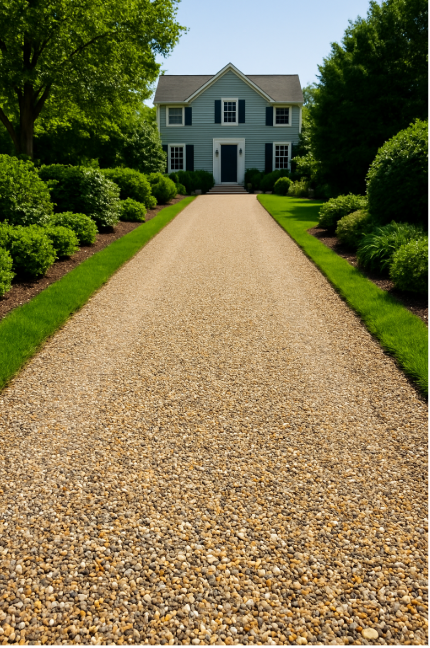
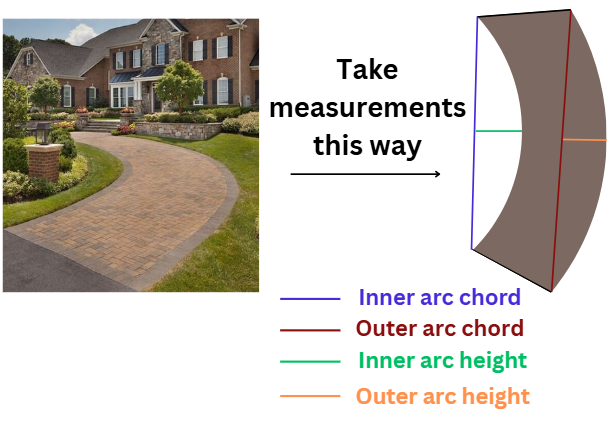
Crusher Run – Curved Path
Calculation is based on average density of 1700 kg/m³.
Calculation Results
Gravel Volume
0.00 m³
Gravel Weight
0.00 t
Crusher Run – Circular Area
Calculation is based on average density of 1700 kg/m³.
Calculation Results
Gravel Volume
0.00 m³
Gravel Weight
0.00 t

Crusher Run – Annular Ring
Calculation is based on average density of 1700 kg/m³.
Calculation Results
Gravel Volume
0.00 m³
Gravel Weight
0.00 t

Rectangular Crusher Run Calculator
Calculation is based on average density of 1700 kg/m³.
Calculation Results
Gravel Volume
0.00 m³
Gravel Weight
0.00 t
What Is Crusher Run?
Crusher run is a compactable base material made from crushed stone mixed with stone dust and fines. It is commonly used under driveways, walkways, patios, slabs, and other surfaces where a firm, load-bearing base is needed.
Because it contains both larger aggregate and fine particles, crusher run locks together tightly when compacted. That makes it very different from loose decorative gravel, which shifts more easily under traffic.
Crusher Run vs Other Base Materials
| Material | Main Characteristic | Best Use |
|---|---|---|
| Crusher Run | Stone + fines, compacts tightly | Driveway base, patio base, sub-base |
| #57 Stone | Open-graded, better drainage | Drainage, under decks, French drains |
| Road Base / DGA | Engineered compactable blend | Pavements, roads, parking areas |
| Pea Gravel | Rounded, decorative | Landscaping, light paths |
Why Crusher Run Is Used for Base Layers
Crusher run is one of the most common base materials because it provides both stability and compaction. The larger stone pieces create structural strength, while the fines fill voids and reduce movement. This helps prevent rutting, shifting, and settlement under repeated traffic.
For that reason, crusher run is widely used for:
- Driveway base layers
- Paver patios and walkways
- Shed pads and equipment pads
- Parking areas
- General subgrade improvement
How Crusher Run Quantity Is Calculated
Crusher run volume is calculated using:
Volume = Area × Depth
The calculators above estimate area based on the selected shape, including straight paths, curved paths, circular areas, rings, and rectangles. That volume is then converted into cubic yards, cubic feet, or cubic meters, and finally into weight using density.
Typical Crusher Run Depth by Project
| Project Type | Recommended Depth |
|---|---|
| Walkway / light path | 3″ – 4″ |
| Paver patio base | 4″ – 6″ |
| Residential driveway | 4″ – 8″ |
| Heavy-use driveway | 8″ – 12″ |
| Shed or pad foundation | 4″ – 6″ |
Crusher Run Density and Weight
Crusher run typically has a density around 1,600 to 1,800 kg/m³ depending on stone type, moisture, and how tightly the material is compacted. A default value of 1,700 kg/m³ is a practical estimate for general calculations.
Keep in mind that suppliers often sell crusher run by the ton, not just by cubic yard. If your supplier provides a known tons-per-yard conversion, use the manual density override for better accuracy.
Important Installation Tips
- Excavate topsoil and soft material before installing crusher run
- Install in layers rather than placing the full depth at once
- Compact each layer thoroughly with a plate compactor or roller
- Maintain slope for drainage, especially on driveways
- Use edging where needed to help contain the base
- Order extra material to account for compaction and uneven grade
Common Mistakes When Using Crusher Run
- Using too little depth for vehicle traffic
- Skipping compaction between lifts
- Installing over wet or unstable soil
- Using crusher run where open drainage stone is actually required
- Assuming loose delivered volume equals finished compacted volume
When Crusher Run Is Not the Best Choice
Crusher run is excellent for compacted bases, but it is not ideal where maximum drainage is required. For example, French drains and some drainage trenches usually perform better with open-graded stone like #57 stone because the fines in crusher run reduce water flow.
FAQs
Is crusher run good for a driveway?
Yes. Crusher run is one of the most common driveway base materials because it compacts tightly and holds up well under vehicle loads.
How much crusher run do I need?
That depends on your project length, width, shape, and finished depth. Use the calculator above to estimate total volume and weight for your exact layout.
What is the difference between crusher run and gravel?
Crusher run contains fines and compacts tightly, while gravel is often cleaner and looser. That makes crusher run better for bases and gravel better for some drainage or decorative uses.
How much extra crusher run should I order?
Ordering 5–10% extra is common because crusher run settles during compaction and because site grades are rarely perfectly uniform.