Limestone Calculator
Calculate limestone for driveways and base layers. Choose your shape below.
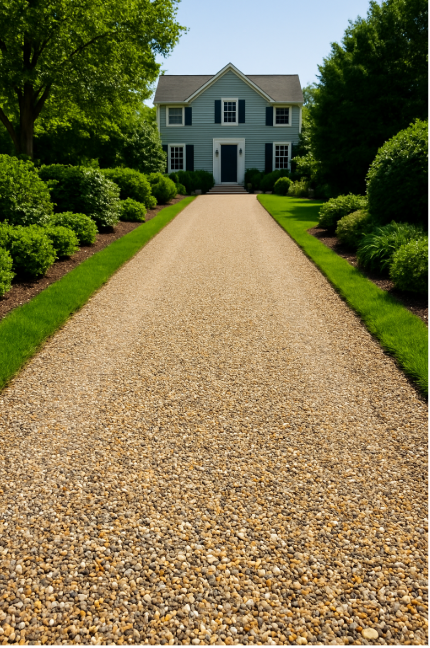
Limestone – Straight Path
Width
Calculation is based on average density of 1700 kg/m³.
Calculation Results
Gravel Volume
0.00 m³
Gravel Weight
0.00 t
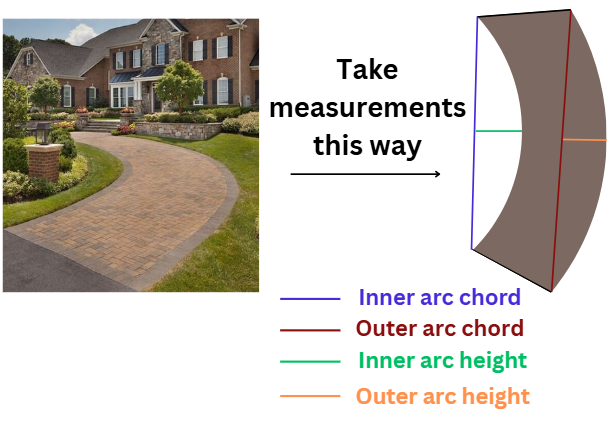
Limestone – Curved Path
Calculation is based on average density of 1700 kg/m³.
Calculation Results
Gravel Volume
0.00 m³
Gravel Weight
0.00 t
Limestone – Circular Area
Calculation is based on average density of 1700 kg/m³.
Calculation Results
Gravel Volume
0.00 m³
Gravel Weight
0.00 t

Limestone – Annular Ring
Calculation is based on average density of 1700 kg/m³.
Calculation Results
Gravel Volume
0.00 m³
Gravel Weight
0.00 t

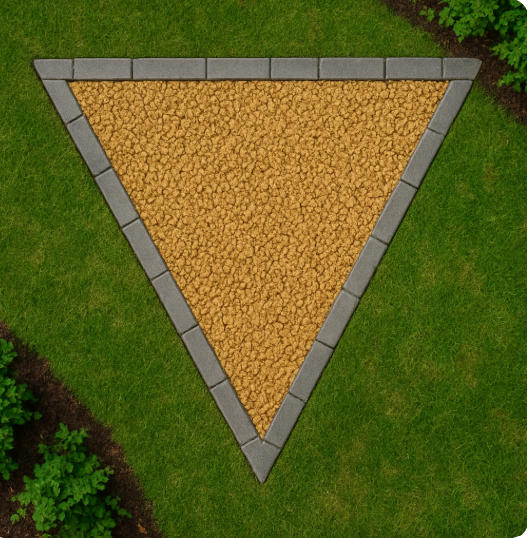
Triangular Limestone Calculator
Weight is calculated on the average pea gravel density of 1700 kg/m³. You can always enter the density manually for customized calculations.
Calculation Results
Gravel Volume
0.00 m³
Gravel Weight
0.00 t
Rectangular Limestone Calculator
Calculation is based on average density of 1700 kg/m³.
Calculation Results
Gravel Volume
0.00 m³
Gravel Weight
0.00 t
What Is Limestone Aggregate?
Limestone aggregate is crushed stone made from sedimentary rock that is widely used in driveways, base layers, road construction, drainage systems, and general site work. It is valued for its strength, availability, and ability to compact well in many construction applications.
Depending on the gradation, limestone can be used either as a compactable base material or as a cleaner drainage stone. That makes it one of the most versatile aggregates used in residential and commercial projects.
Common Uses of Limestone
| Application | Why Limestone Is Used |
|---|---|
| Driveways | Compacts well and handles repeated vehicle loads |
| Road and pavement base | Provides stable structural support under traffic |
| Paver and patio base | Creates a firm sub-base for surface installations |
| Drainage layers | Allows water movement when cleaner stone sizes are used |
| Foundation and slab support | Improves load distribution and reduces settlement |
| Walkways and paths | Works as both a structural and decorative stone depending on size |
Limestone Sizes and Typical Uses
| Limestone Type / Size | Typical Use |
|---|---|
| Limestone screenings | Leveling, compacted finish layers, paver base topping |
| 3/4″ limestone | Driveways, general base, drainage |
| #57 limestone | Drainage, under slabs, pipe bedding, foundation zones |
| Dense graded limestone | Driveway base, road base, compacted sub-base |
| Larger limestone rock | Erosion control, heavy fill, retaining areas |
How Limestone Quantity Is Calculated
Limestone quantity is calculated using:
Volume = Area × Depth
The calculators above estimate area based on the selected shape, including straight paths, curved paths, circular areas, annular rings, triangles, and rectangles. That volume is then converted into cubic yards, cubic feet, or cubic meters, and finally into weight using the density value.
Limestone Density and Weight
Limestone is generally heavier than many loose gravels and often falls in the range of roughly 2,200 to 2,500 kg/m³ depending on the exact rock, gradation, and moisture condition. A default value of 2,400 kg/m³ is a reasonable estimate for many limestone calculations.
However, bulk loose limestone and compacted crushed limestone can behave differently in the field. If your supplier provides a tons-per-yard figure for the specific limestone you are ordering, use the manual density override for more accurate results.
Limestone vs Gravel
| Feature | Limestone | General Gravel |
|---|---|---|
| Origin | Sedimentary rock | Can include mixed rock types |
| Compaction | Very good in crushed form | Varies by particle shape |
| Use in base layers | Very common | Depends on type |
| Drainage performance | Good when clean/open graded | Varies by gradation |
| Typical use | Base, driveway, road, support layers | Decorative, drainage, or structural depending on material |
Typical Limestone Depth by Project
| Project Type | Typical Depth |
|---|---|
| Walkway / path | 2″ – 4″ |
| Decorative limestone area | 2″ – 3″ |
| Driveway surface or base | 4″ – 8″ |
| Paver patio base | 4″ – 6″ |
| Drainage trench | 6″ – 12″ |
| Heavy-use base layer | 8″ – 12″ |
Important Tips When Ordering Limestone
- Choose the limestone gradation based on the job, not just the appearance
- Use compactable limestone for base layers and clean limestone for drainage
- Add 5–10% extra for uneven grade, waste, and field adjustment
- Compact limestone in layers for driveways and structural base applications
- Confirm whether your supplier sells by ton, cubic yard, or bulk bag
Where Limestone Should Not Be Used
- Play areas or barefoot spaces if the limestone is angular and sharp
- Drainage systems if the limestone contains too many fines
- Projects requiring fine sand-like bedding instead of crushed aggregate
FAQs
How much does limestone weigh per cubic yard?
It varies by size and moisture content, but limestone is typically sold by the ton and is often heavier than many general gravels. Supplier-specific tons-per-yard values are the best source for exact ordering.
Is limestone good for a driveway?
Yes. Crushed limestone is widely used for driveways because it compacts well and provides a firm, durable surface and base.
What is the difference between crushed limestone and gravel?
Crushed limestone is a specific aggregate made from limestone rock, while gravel is a broader category that may include different rock types and particle shapes.
How much extra limestone should I order?
Ordering 5–10% extra is common to account for compaction, uneven subgrade, and small losses during spreading and placement.